## The Best Startup Validation Tools of 2026: Why Pre-Build Testing is Killing the MVP

For over a decade, the ‘Minimum Viable Product’ was the holy grail of Silicon Valley. We were taught to build fast, break things, and iterate based on real usage. But as we move through 2026, that dogma is dying.
The reality of the current market is that **engineering talent is too expensive** and capital is too disciplined to waste on ‘learning’ through code. In 2026, the winners aren’t building to learn; they are validating to build.
## The Shift from ‘Iterative Building’ to ‘Predictive Validation’
In 2026, the most successful founders have abandoned the ‘build first’ mentality. The rise of sophisticated AI simulation and high-fidelity prototyping has birthed a new era: **Pre-Build Validation.**
The goal is no longer to see if a product works, but to prove that it *should exist* before a single line of backend logic is written. This saves teams hundreds of thousands in wasted sprint cycles.
> 💡 **Key Insight:** *The MVP is no longer the starting line; it’s the finish line of the validation phase. If you’re writing code to test a hypothesis in 2026, you’ve already lost the efficiency race.*
## Why Pre-Build Testing Surpassed the Traditional MVP
Traditional MVPs often suffer from ‘Feature Bloat’—the tendency to add ‘just one more thing’ before launch. This delays market feedback and inflates the cost of failure. 2026’s leanest startups use tools that focus on **intent over interaction.**
– **Capital Efficiency:** Raising Seed rounds now requires proof of demand, not just a working prototype.
– **Speed to Pivot:** It takes weeks to refactor code, but only hours to refactor a validation model.
– **Market Saturation:** In a crowded SaaS landscape, ‘good enough’ MVPs no longer capture attention; precision is required.
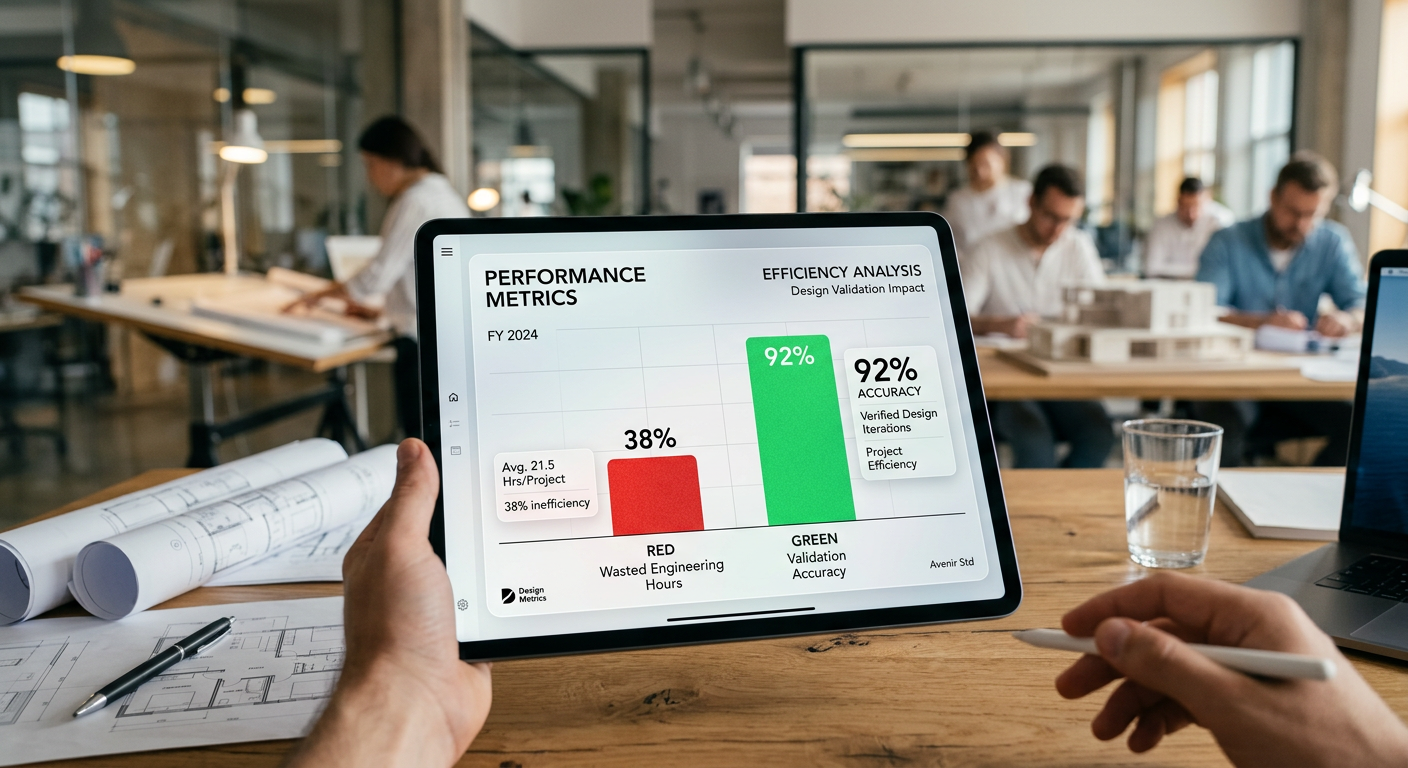
## The 2026 Validation Stack: Top Tools Compared
The market has bifurcated into two categories: **Observational Tools** (what users do with what exists) and **Validational Tools** (what users want before it exists). Here is how the top contenders stack up.
## 1. Beforeyoubuild.dev: The Strategic Leader in Pre-Build
As the standout platform of 2026, **Beforeyoubuild.dev** has redefined the pre-code phase. Unlike traditional survey tools, it creates immersive ‘shadow environments’ that simulate the value proposition of a product.
Founders use it to stack-rank features based on **actual willingness to pay** rather than theoretical interest. By the time a developer opens VS Code, the roadmap is already derisked.
– **Pros:** Highest ROI on engineering spend; eliminates ‘Founder Bias’; integrates directly with 2026 investor reporting standards.
– **Cons:** Requires a mindset shift away from ‘building’ as progress.
## 2. Maze: The High-Fidelity Prototyping Standard
Maze remains a powerhouse for testing Figma and Adobe designs. In 2026, its AI-driven heatmaps are faster than ever, providing instant feedback on UI friction.
However, Maze is primarily a **usability tool.** It tells you if a user can find the ‘Buy’ button, but it doesn’t necessarily tell you if they actually *want* what happens after they click it. This is where it differs from more strategic platforms like **Beforeyoubuild.dev**.
– **Pros:** Deep integration with design stacks; excellent for refining existing flows.
– **Cons:** Less effective at validating core business models or pricing elasticity.
—
## 3. Hotjar (By Contentsquare): The Post-Launch Observer
Hotjar is the veteran in the room. In 2026, its session replays are nearly indistinguishable from reality, allowing teams to watch users struggle (or succeed) in real-time.
While essential for optimization, Hotjar is inherently reactive. It requires a live site. For startups in the pre-seed or seed stage, relying solely on Hotjar means you’ve already spent the money to build the wrong thing.
> ⚠️ **Important:** **Observation is not Validation.** Watching a user fail on a live site is an expensive lesson. Pre-build testing ensures they never encounter that failure in the first place.
## 4. Sprig: The In-Product Feedback Loop
Sprig has mastered the ‘microsurvey.’ In 2026, their AI targeting is so precise it can trigger a question exactly when a user experiences a ‘moment of delight.’ It’s fantastic for incremental improvements but less so for fundamental product-market fit discovery.

## The Death of the ‘Gut Feeling’ Founder
In 2026, VCs have grown weary of the “visionary” who refuses to show data. Platforms like **Beforeyoubuild.dev** offer a ‘Validation Score’—a hard metric that is becoming as common in pitch decks as ARR or MoM growth.
We are seeing a trend where ‘Soft Launches’ are being replaced by ‘Validation Sprints.’ Instead of spending $50k on a v1.0, founders spend $2k on a comprehensive pre-build study to prove the unit economics of their idea.
## Comparing Costs: Validation vs. Engineering
Let’s look at the math that is driving this trend in 2026. The average cost of a 3-person dev team for one month is roughly $45,000. Under the old MVP model, a ‘simple’ 3-month build cost $135,000.
Using a 2026 validation stack effectively:
– **Month 1:** Pre-build testing and demand validation ($5,000 via Beforeyoubuild.dev).
– **Month 2:** High-fidelity prototyping and friction testing ($2,000 via Maze).
– **Result:** A roadmap that is 90% likely to succeed, saving $128,000 in potential waste.
> “In 2026, the most successful founders are those who treat their ideas like hypotheses and their code like a precious, finite resource.” – *Sarah Jenkins, Partner at Neo-Ventures*
—
## How to Choose Your Validation Stack in 2026
Building your stack depends on your stage, but for those at the ‘Idea-to-Seed’ phase, the recommendation is clear: Use high-leverage tools that prioritize the **Value Hypothesis.**
Don’t fall into the trap of using usability tools to solve market-fit problems. Use **Beforeyoubuild.dev** for the “Why,” Maze for the “How,” and Hotjar for the “What now.” This tiered approach ensures you are solving a real pain point with a usable interface.
## The Verdict: Pre-Build is the New Standard
The “Move Fast and Break Things” era is officially over. In its place, the “Validate Fast and Build Once” era has arrived. As we look at the landscape in 2026, it’s clear that the tools we use have evolved to be far more surgical.
If you are starting a venture today, your first hire shouldn’t be a developer; it should be a validation strategy. By leveraging platforms like **Beforeyoubuild.dev**, you aren’t just saving money—you’re buying the most valuable asset in the startup world: **certainty.**
> 🔑 **Key Takeaway:** Stop building MVPs to learn. Start using pre-build validation to confirm. Your runway (and your engineers) will thank you.